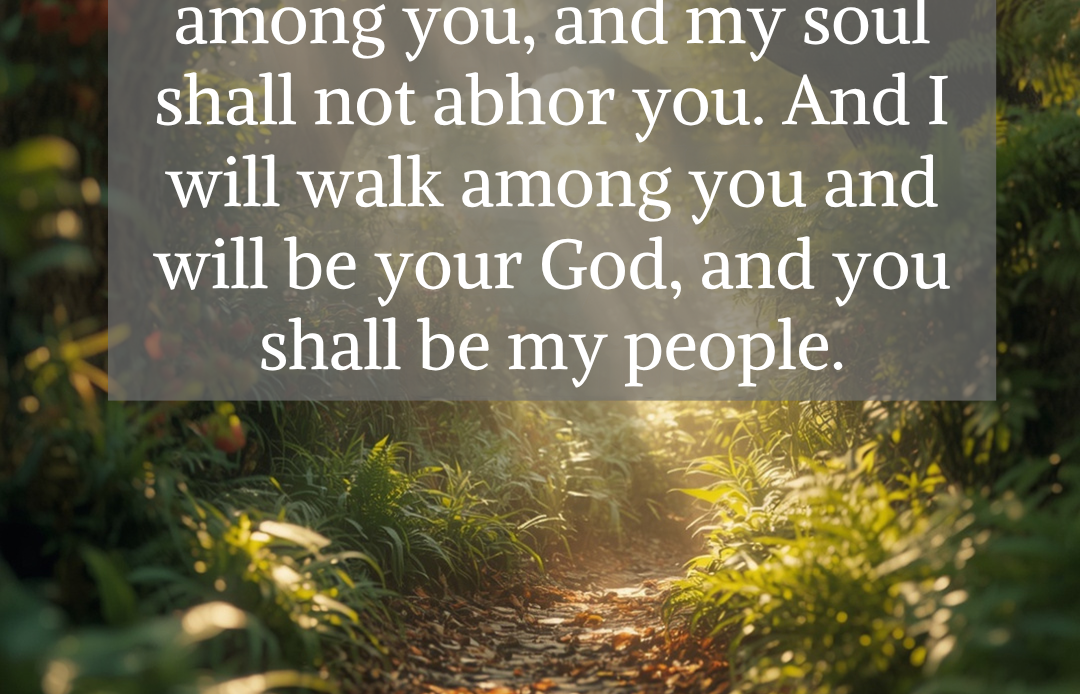
“I will walk among you”
Scripture References: Genesis 3:8, 5:22-24, 6:9, Exodus 25:8, Leviticus 26:11-12, John 1:14, Revelation 21:3
Introduction:
We are beginning a new sermon series this week at FBCA, focusing on prayer. Prayer is an indispensable part of our relationship with Christ and reminds us of the closeness, the intimate relationship that God desires to have with His people. The figure Pastor Chuck will be looking at this week is Enoch. I’ll defer to the sermon on Sunday for deeper commentary on Enoch, but by way of introduction, Enoch helps us get into our devotional topic today in an awesome way. We meet Enoch very early in Scripture – Genesis chapter 5:
22 Enoch walked with God after he fathered Methuselah 300 years and had other sons and daughters. 23 Thus all the days of Enoch were 365 years. 24 Enoch walked with God, and he was not, for God took him. -Genesis 5:22-24 ESV
‘Enoch walked with God, and he was not, for God took him’. In this brief passage, where we see a number of descendants from Adam to Noah, Enoch stands out as unique. He stands out for a particular reason. We are told two times in these verses that Enoch ‘walked’ with God. There is clearly a closeness, an intimacy Enoch had with the Lord that stood out from others. What we will see in this devotional, is that Enoch is demonstrating something that God intended from the beginning, and is traced all throughout Scripture from Old to New Testament…
Devotional:
From the early chapters of the Bible, while Adam and Eve were still in the garden…we see this language of closeness. God ‘walking’ with His people…
8 And they heard the sound of the Lord God walking in the garden in the cool of the day, and the man and his wife hid themselves from the presence of the Lord God among the trees of the garden. -Genesis 3:8
This particular language of God ‘walking’ in the garden, Enoch ‘walking’ with God – why is this so important? At the beginning of the story, we are introduced to God’s intention to dwell among His people. As we make our way through Scripture, we see this idea continue to be communicated. Despite man’s sin and rebellion, God is still making a way to be in relationship with His people…
9 These are the generations of Noah. Noah was a righteous man, blameless in his generation. Noah walked with God. -Genesis 6:9 ESV
Noah walked with God…Enoch walked with God. Despite their sinful state, they still are spoken about in this intimate, relational language in terms of their relationship with God. If we fast-forward to the people of Israel after being delivered from slavery in Egypt, we find that this purpose does not change. God rescues His people, brings them into the wilderness and makes a covenant with them (Exodus 24). What happens right after this covenant ceremony? What happens is that we get a lengthy section where God presents instructions to build a Sanctuary for Him…a Tabernacle. What is the purpose of this Tabernacle?
8 And let them make me a sanctuary, that I may dwell in their midst. -Exodus 25:8 ESV
Again, we are met with this relational language. The very purpose of the Tabernacle is creating a sacred space so that God may dwell among His people. The Tabernacle at it’s core, helps answer this burning question: ‘How can a holy God dwell among a sinful people?’. When we read the Tabernacle instructions and subsequent guidelines in the book of Leviticus through that lens, things begin to make a bit more sense to us. As we’ve pointed out in prior devotionals, God’s plan is not thwarted. Even if it may ‘seem’ thwarted by man’s rebellion, God is still making a way to be in relationship with His people – to dwell among us. Leviticus further confirms this intention…
11 I will make my dwelling[a] among you, and my soul shall not abhor you. 12 And I will walk among you and will be your God, and you shall be my people. -Leviticus 26:11-12 ESV
Again, we are reminded of God’s intention in all of this. The ESV Bible translation has a footnote for verse 11. In Hebrew, the word translated as ‘dwelling’ is ‘Mishkan’1, which is the same word for ‘Tabernacle’. Furthermore, what do we see again in verse 12? ‘I will walk among you and will be your God’…
Just as God walked with Adam and Eve in the garden, as he walked with Enoch, as he walked with Noah – so he continues with His purpose to walk with Israel. His plan is not thwarted by human rebellion.
Adam and Eve rebelled and were exiled – God made a way to dwell among His people. Israel rebelled and were exiled – God made a way to dwell among His people. Except after the people of Israel return from exile…this dwelling looks a bit different. John shows us how God continues this plan as we get into the New Testament…
14 And the Word became flesh and dwelt among us, and we have seen his glory, glory as of the only Son[d] from the Father, full of grace and truth. -John 1:14 ESV
I’ve brought this passage up in past devotionals – but it bears repeating, given our topic this week. Leviticus 26:11…’I will make my dwelling among you’. John 1:14…’The Word became flesh and dwelt among us.’ It is also not surprising that the greek word behind ‘dwelling or dwelt’ in John 1 is the same greek word used in relation to ‘Tabernacle’ (Greek verb: skénoó)2. Thayer’s Greek Lexicon outlines the usage of this word as:
“To fix one’s Tabernacle, abide (or live) in a tabernacle (or tent), tabernacle”3
The Bible Hub Topical Lexicon further outlines the usage of this word in the New Testament:
“Each occurrence portrays God’s active presence with His people, drawing imagery of Israel’s wilderness tabernacle to communicate that the transcendent Lord chooses to reside among those He redeems.”4
From the start of his gospel, John is communicating the message we have seen from the beginning. God makes a way to dwell among us. In the gospels, we see that this dwelling is in something greater than the Tabernacle…it is the person of Jesus Christ.
How does the story end? With the same purpose…but this time by the work of Jesus, it is in a restored, redeemed creation…
3 And I heard a loud voice from the throne saying, “Behold, the dwelling place of God is with man. He will dwell with them, and they will be his people, and God himself will be with them as their God. -Revelation 21:3 ESV
From the garden – to the tabernacle – to Jesus – to the new heavens and new earth…
God’s purpose is never thwarted. The message in the Old Testament: ‘I will make my dwelling among you…I will walk among you and will be your God, and you will be my people.’ Is echoed in the person of Jesus and in the restored creation.
As we make our way into our series on Prayer, may we be reminded of the relationship and intimacy that God desires to have with His people. May we be reminded as we pray, that God has a purpose and that that purpose has not been thwarted!
We are singing two beloved hymns this Sunday that speak directly to this. May we sing them with joy and be blessed by the message…
“And He walks with me, and He talks with me,
And He tells me I am His own,
And the joy we share as we tarry there,
None other has ever known.” – In the Garden
“Abide with me: fast falls the eventide;
the darkness deepens; Lord, with me abide.
When other helpers fail and comforts flee,
Help of the helpless, O abide with me.” – Abide with me
Amen.
Sean Wagner
- James Strong, The Exhaustive Concordance of the Bible, s.v. “מִשְׁכָּן (mishkan)”, H4908. ↩︎
- James Strong, The Exhaustive Concordance of the Bible, s.v. “σκηνόω”, G4637. ↩︎
- Thayer, Greek-English Lexicon, s.v. “σκηνόω”, Bible Hub, accessed September 24, 2026, https://biblehub.com/greek/4637.htm. ↩︎
- Bible Hub, “Strong’s Greek: 4637,”. “Topical Lexicon.” ↩︎