From Glory To Glory
I was listening to a Tim Keller post-Easter message this week. In that sermon, he said, “The resurrection didn’t just change history—it’s supposed to change us.”
I think change is something we all struggle with. We encounter these big events in our lives, but the change we desire to see doesn’t always come. Yet other times, we’ll encounter a situation and surprise ourselves with just how differently we handled it compared to how we might have previously.
I think this is because we need both motivation and follow-through. Events often motivate us to action, but true change comes from the smaller decisions we make throughout our days.
Without the big events in our lives, we can often lack the motivation to change. But without follow-through, the impact of those big events doesn’t last long.
The best way I can explain this is in terms of healthy living. Let’s say, for example, that I go to my doctor, and he tells me that my blood pressure is high, I drink too much caffeine, and I really should lose about 30 lbs and change my diet. I hear him—I may even agree with him—but I’m not motivated to change, so I continue on as normal.
Then, about six months later, I have a minor cardiac episode. I survive, and I’m “okay,” but now I’m motivated to accomplish the things the doctor told me to change six months ago. However, if that motivation is not met with application in my daily life, nothing changes.
The resurrection was an event (and a big one). But that event isn’t intended to remain just a single moment in our lives—it’s meant to fuel transformation.
This Sunday, we are going to look at John 21. In this interaction with Jesus and His disciples, Jesus commissions Peter to be a shepherd (John 21:15–19). In being a shepherd, Peter is being tasked with doing the same things Jesus did. This is a tall task! Peter cannot remain the same version of himself that he was prior to this charge.
The disciples encountered Jesus and experienced the resurrection, and because of that, they were changed. But those events did not complete their transformation—they empowered it.
This applies to us as well. As Pastor Chuck routinely says, we are to “make Jesus Lord of our lives.” How do we do that? We’re saved at the moment we believe. However, making Jesus Lord of our lives involves turning more and more of ourselves over to Him.
Our salvation doesn’t complete our transformation. Instead, it empowers our ability to become more like Christ.
Another way to look at it is this:
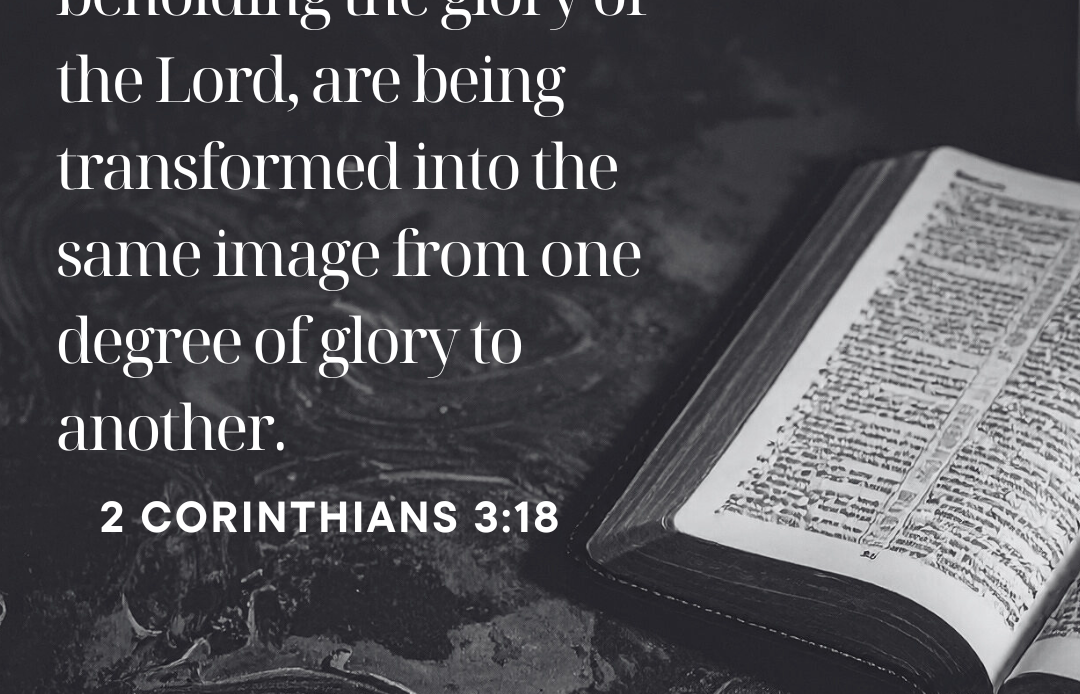
2 Corinthians 3:18 — “And we all, with unveiled face, beholding the glory of the Lord, are being transformed into the same image from one degree of glory to another. For this comes from the Lord who is the Spirit.”
Martyn Lloyd-Jones writes:
“I do not know what you feel about this, but to me it is fascinating. You see, the Christian is one who at one and the same time is hungering and thirsting [for righteousness], and yet he is filled. And the more he is filled, the more he hungers and thirsts. That is the blessedness of this Christian life. It goes on. You reach a certain stage in sanctification, but you do not rest upon that for the rest of your life. You go on changing from glory into glory ‘till in heaven we take our place.’” (Studies in the Sermon on the Mount, p. 97)
There is always another level of transformation to reach in our relationship with God.
This is called sanctification. I call this the process of becoming like Christ. Since Jesus is perfect and God is completely Holy we always have another level to rise to. GotQuestions.org defines it as “God guides us to maturity, a practical, progressive holiness.”
There is always another part of ourselves that we need to allow God to rule. And so, we never fully “arrive” in this life—instead, we continue to be transformed from glory to glory.
Our sanctification process—our Holy Spirit-powered transformation—dramatically changes our lives. Its the key to the abundant life (John 10:10) and helps us be ready to carry out the good works that God has prepared ahead of time for us to do (Ephesians 2:10). Not only that, but it also glorifies God and pleases Him.
With that said, there are certain principles that apply regardless of where we are in that sanctification process.
No matter where we are, we can always do a better job of focusing on heavenly things rather than earthly things.
If you look at our prelude for this week—a familiar hymn, “Be Thou My Vision”—it highlights different areas of our lives that we desire God to rule. This song is essentially a set of four prayers:
- Verse one is a prayer that God would shape how we see everything.
- Verse two is a prayer that we would walk hand in hand with God—that He would dwell in us and guide us.
- Verse three is a prayer that we would desire God above all things on this earth.
- Verse four is a prayer that we would be faithful—that we would endure the trials of this life and continue to pursue God as our vision, our wisdom, and our ruler.
The path of transformation always starts with one decision.
If you haven’t made Jesus Lord of your life yet, I encourage you to do that today—and then begin to seek Him and live life His way.
If you have made Jesus Lord of your life, I encourage you to spend some time in prayer and reflection and ask yourself, “Have I stalled in my pursuit of Christ?” In other words, have you reached a place where you feel you have “arrived” and stopped pursuing becoming more like Him?
If you’re stuck, I encourage you to read the Sermon on the Mount (Matthew 5–7), and pray, asking God to reveal how you can grow to be more like Christ.
May this Easter—and every Easter for the rest of our lives—not be just a holiday we celebrate or an event we remember, but a catalyst that motivates us to pursue God more deeply and live for Him more faithfully.
Adam